What sets Flight One apart from other flight training providers?
Flight One is an Australian family-owned aviation business created by people with a genuine passion for flying and a long-term ambition to raise the standard of general aviation in Australia.
Flight One is not simply a training provider. Its broader aviation investment encompasses charter and real-world flight operations, aircraft maintenance and engineering capability, airport services, specialist aircraft programmes and both diploma and non-diploma pilot training. This gives students exposure to a working general aviation environment extending well beyond the classroom and training circuit.
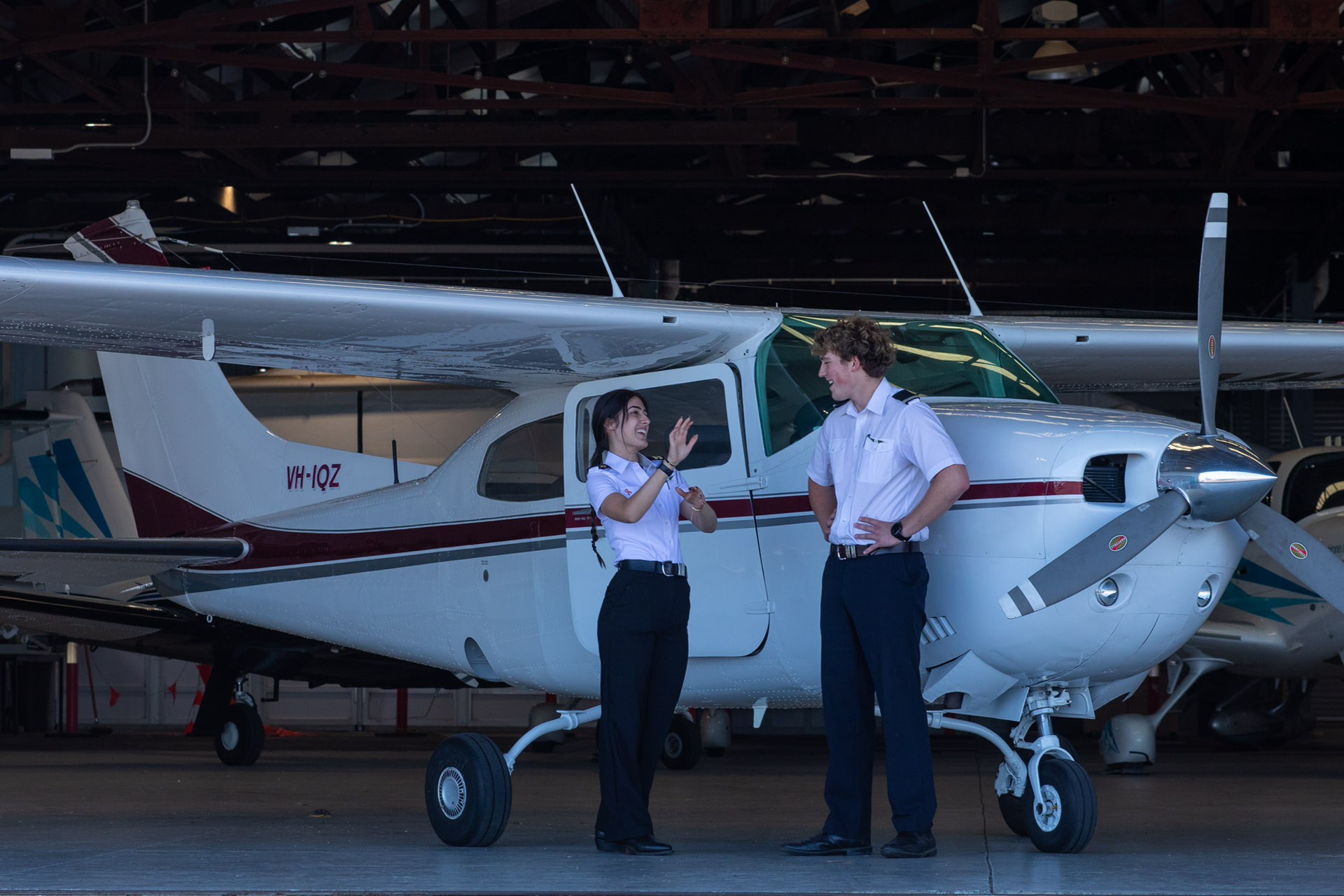
Rather than following a high-volume training model focused primarily on producing qualifications, Flight One takes the time to immerse trainees in the culture, standards and day-to-day realities of the aviation industry. Students learn within an environment where professional pilots, instructors, engineers, aircraft operators and support teams work alongside one another.
This approach is designed to help trainees develop more than the minimum technical competencies. It encourages:
- professional conduct and operational discipline;
- a strong and practical safety culture;
- an understanding of how different parts of the aviation industry work together;
- exposure to aircraft and operating environments commonly encountered in general aviation; and
- the confidence, adaptability and industry awareness required to begin building an aviation career.
For Flight One, pilot training is not a production line. It is an opportunity to welcome each trainee into an authentic aviation community and help them become a capable, safety-focused and employable aviation professional.
Learn more about the Flight One aviation environment.
I’m interested in learning to fly. Where should I start?
If you are exploring aviation for the first time, a Trial Introductory Flight is a useful first step. It lets you experience a flying lesson, meet the training team and discuss the pathway that best matches your goals.
If your goal is a professional flying career, compare the Commercial Pilot Licence Diploma with the Professional Pilot Double Diploma. You can then submit an application for an eligibility review and admissions guidance.
What is the difference between a pilot licence, a rating and a Diploma of Aviation?
A pilot licence is issued by the Civil Aviation Safety Authority (CASA) and determines the flying privileges you may exercise. A rating or endorsement adds specific privileges or aircraft competencies to a licence, such as an instrument rating or multi-engine aeroplane class rating.
A Diploma of Aviation is a nationally recognised Australian Qualifications Framework qualification issued by the registered training organisation. Completing a diploma does not, by itself, guarantee the issue of a CASA licence or rating. You must also satisfy CASA’s examinations, flight tests, medical, experience and other regulatory requirements.
What is the difference between the CPL Diploma and the Professional Pilot Double Diploma?
The Commercial Pilot Licence Diploma focuses on the training required for an aeroplane Commercial Pilot Licence and the AVI50222 Diploma of Aviation (Commercial Pilot Licence – Aeroplane).
The Professional Pilot Double Diploma continues beyond the CPL phase into multi-engine and instrument-flight training. It combines:
- AVI50222 Diploma of Aviation (Commercial Pilot Licence – Aeroplane), CRICOS 109197K; and
- AVI50519 Diploma of Aviation (Instrument Rating), CRICOS 0101218.
The Double Diploma is the broader pathway for students seeking CPL, multi-engine and instrument-rating outcomes in one structured programme.
What are the main CASA outcomes of the Professional Pilot Double Diploma?
Subject to demonstrated competency and satisfaction of all CASA requirements, the principal flying outcomes are:
- Private Pilot Licence (Aeroplane);
- Commercial Pilot Licence (Aeroplane);
- multi-engine aeroplane class rating; and
- instrument rating.
These CASA outcomes sit alongside the two nationally recognised Diploma of Aviation qualifications. Licence and rating issue remains subject to CASA requirements, including the applicable examinations and flight tests.
Why is the Commercial Helicopter Pilot Diploma shorter than the aeroplane course?
Aeroplane and helicopter training are separate pathways with different aircraft, competency standards, experience requirements and course structures. The Commercial Helicopter Pilot Diploma is therefore not a shortened version of the aeroplane CPL course.
The helicopter programme is built specifically around AVI50322 Diploma of Aviation (Commercial Pilot Licence – Helicopter) and the relevant CASA helicopter requirements. It includes more than 100 hours of logged helicopter flight training but does not include the additional multi-engine and instrument-rating phase contained in the Professional Pilot Double Diploma.
Can I start a professional pilot course with no previous flying experience?
Yes. Flight One’s ab initio professional pilot programmes are designed for suitable applicants who have no previous flight training. Applicants must still meet the course entry criteria, which include education or language, literacy and numeracy requirements, aviation English proficiency, aptitude assessment, interview and the applicable medical and security requirements.
Diploma applicants must normally be at least 18 years of age when training commences. Review the entry criteria on the relevant course page before applying.
Can previous flying experience or an existing licence reduce my course?
Possibly. Relevant, current and well-documented prior training or experience may be considered through credit transfer or Recognition of Prior Learning. Flight One must assess the evidence against the requirements of the qualification and the approved flight-training syllabus.
An existing licence or logged hours do not automatically reduce the course. Currency, competency, training records, aircraft experience and the point at which you could safely enter the programme must all be considered. Tell the admissions team about previous training when you apply and provide your logbook, licences, examination results and training records for review.
How long are the diploma courses and how much time must I commit?
The aeroplane diploma programmes are intensive, full-time courses with regular on-campus attendance:
- CPL Diploma: approximately 68 weeks;
- Professional Pilot Double Diploma: approximately 82 weeks, comprising the CPL phase followed by multi-engine instrument-rating training; and
- Commercial Helicopter Pilot Diploma: approximately six months full-time, with a part-time option subject to availability and the published course arrangements.
Aeroplane diploma students should plan for a minimum weekly commitment of 20 hours, with additional personal study and preparation. Flying schedules can vary with weather, aircraft serviceability, instructor availability and individual progress.
Where is training conducted, and what happens when weather affects flying?
Flight training is conducted at Flight One’s Archerfield Airport campus in Brisbane, Australia. Theory, briefings, simulation and flight activities are scheduled according to the requirements of the course.
Aviation training is weather-dependent. If conditions are unsuitable for a planned flight, the activity may be rescheduled or, where practical, replaced with theory, briefing, simulation or another suitable training activity. Students must maintain flexibility and attend the revised programme so they can continue to make satisfactory progress.
Do I need a CASA Class 1 medical?
A CASA Class 1 medical certificate is required to exercise the privileges of a Commercial Pilot Licence. Domestic applicants and applicants already in Australia are expected to obtain a restriction-free CASA Class 1 medical before commencing, within the timeframe stated in the course entry criteria.
Overseas applicants should begin the medical process as early as possible. In limited circumstances, Flight One may permit an offshore student to commence under an approved alternative arrangement, but the student must still obtain the required CASA Class 1 medical during the early part of training and before undertaking activities for which it is required.
Medical certification is determined by CASA and its authorised medical examiners. Applicants with any concern about eligibility should seek advice from a designated aviation medical examiner before making major financial or travel commitments.
What is the ADAPT pilot aptitude assessment?
ADAPT is Flight One’s pilot aptitude assessment for professional pilot applicants, unless an exemption is approved. It helps assess suitability for the demands of flight training and includes areas such as cognitive ability, mathematics, personality and task-management performance.
ADAPT is one part of the admissions process rather than a stand-alone promise of success. Applicants must achieve the required result and also satisfy the course entry criteria and interview requirements.
How do I apply and enrol?
Start by completing the online application for your preferred course and intake. The admissions process generally includes:
- an initial eligibility and document review;
- course and funding information;
- the ADAPT pilot aptitude assessment, unless exempt;
- a Trial Introductory Flight where practical;
- an interview with the training team; and
- completion of the required enrolment, medical, identity and security steps.
Places are subject to entry requirements, intake capacity and completion of all required documentation. Applying early is recommended, particularly for international applicants.
Which Flight One courses are eligible for VET Student Loans?
VET Student Loans may be available to eligible domestic students enrolled in an approved diploma course. Flight One’s currently published VSL-approved programmes are:
- AVI50222 Diploma of Aviation (Commercial Pilot Licence – Aeroplane);
- AVI50222 combined with AVI50519 Diploma of Aviation (Instrument Rating) in the Professional Pilot Double Diploma; and
- AVI50322 Diploma of Aviation (Commercial Pilot Licence – Helicopter).
VSL is not available for Flight One’s non-award courses. Approval of a course does not mean every student is eligible or that every cost will be covered. See Flight One’s VET Student Loans information and the Australian Government’s VSL Student Manual.
Why is there a VSL tuition gap for the CPL Diploma but not the Double Diploma?
VET Student Loans are subject to a loan cap for each approved qualification. The current published tuition fee for the stand-alone CPL Diploma is higher than the amount that may be borrowed for that qualification, so the student must pay the difference as a tuition gap.
The Professional Pilot Double Diploma contains two approved qualifications. Under Flight One’s current published fee structure, the tuition can be allocated across the applicable course loan caps without a published tuition gap, provided the student is eligible for VSL and has enough available HELP balance.
A “$0 tuition gap” does not mean the course is free and does not include non-tuition costs. Loan caps and fees can change, so always check the current VSL information and course fees before enrolling.
Does a VET Student Loan cover every course cost?
No. A VET Student Loan can only be used for eligible tuition fees, up to the applicable course loan cap and your available HELP balance. It does not cover non-tuition costs.
Depending on the course, separate expenses may include materials, medical examinations, an Aviation Security Identification Card, CASA examinations and flight tests, equipment, repeat or remedial training, accommodation, transport and living costs. A VSL also creates a Commonwealth debt that is repaid through the taxation system when repayment conditions are met.
Review the current fee schedule for your course and Flight One’s VSL information before accepting an offer.
Does completing a Diploma of Aviation guarantee me a pilot job?
No. Flight One cannot guarantee employment, an interview or progression into an airline or other operator. Graduation confirms that you have completed the qualification requirements; CASA licence and rating outcomes remain subject to CASA requirements.
Employers make their own decisions based on factors such as licence and ratings, flight experience, recency, operational suitability, medical status, references, communication skills and recruitment performance. Flight One’s courses are designed to build professional habits and job-relevant capability, but each graduate remains responsible for developing experience and pursuing employment opportunities.
How can I improve my chances of finding work after graduation?
Successful graduates usually treat job preparation as an ongoing part of training. Useful steps include:
- maintaining strong attendance, study habits, safety standards and professional conduct;
- keeping licences, medicals, reviews and operational knowledge current;
- building a clear aviation résumé and accurate electronic and paper logbooks;
- developing professional relationships and researching general aviation operators;
- remaining flexible about location, aircraft type and entry-level roles; and
- considering relevant post-CPL training where it supports a realistic employment pathway.
Regional general aviation can provide important early-career opportunities. Training such as the Cessna 210 GA Readiness Course may help eligible graduates build exposure to aircraft and operating practices commonly used by employers, but it does not guarantee employment or insurance approval.
Can I work for an airline after graduating?
A Commercial Pilot Licence is an important professional qualification, but graduation does not create an automatic pathway into an airline. Airlines set their own minimum experience, licence, rating, medical, recency, citizenship or work-right and recruitment requirements.
The Professional Pilot Double Diploma adds a multi-engine aeroplane class rating and instrument rating to the CPL pathway, providing a broader technical foundation for future airline-oriented development. Graduates may still need additional flight experience, ATPL theory credits or other qualifications before becoming competitive or eligible for a particular airline role.
Always check the published requirements of the operator you intend to approach.
Which Flight One courses are available to international students?
Flight One’s CRICOS-registered aeroplane diploma options are available to eligible international students:
- AVI50222 Diploma of Aviation (Commercial Pilot Licence – Aeroplane), CRICOS 109197K; and
- the Professional Pilot Double Diploma, combining CRICOS 109197K with AVI50519 Diploma of Aviation (Instrument Rating), CRICOS 0101218.
The Commercial Helicopter Pilot Diploma is not currently offered to international students. Non-award flight-training courses are not CRICOS programmes and cannot serve as the principal course for a Student Visa.
See the international student information and the relevant course page for current availability and entry requirements.
How does the international application process work, and what must I arrange?
International applicants should apply well ahead of their preferred intake. The process generally includes:
- submission of the application, passport, academic and English-language evidence;
- eligibility review and ADAPT aptitude assessment;
- an interview with the training team;
- offer, acceptance and required payments;
- issue of a Confirmation of Enrolment when all conditions are satisfied; and
- the student’s own visa, health cover and travel arrangements.
Applicants must meet the published academic, English, medical and aviation-security requirements. Flight One does not provide migration advice, guarantee a visa or arrange accommodation, although general accommodation guidance is available. Students are responsible for their Student Visa, Overseas Student Health Cover, accommodation, travel and living expenses.
Review Flight One’s international information and the Australian Government’s Study Australia visa guidance.

 School of Aviation